

-Vincent-van-Gogh-Met.jpg)
Before becoming the Buddha, Siddhartha Gautama studies under the greatest ascetics and meditation teachers of his time. He masters their techniques, and each teacher, in turn, offers to make him his successor. But Siddhartha always moves on, disappointed. His fierce search for liberation takes him to the brink of death, but even then he remains trapped in the labyrinth of his own mind.
What finally points the future Buddha the way, in the midst of exhaustion and despair, is a childhood memory:
“I recall once, when my father the Sakyan was working, and I was sitting in the cool shade of a rose-apple tree [that I experienced] rapture & pleasure born from seclusion, accompanied by directed thought & evaluation…’
“Then following on that memory came the realization: ‘That is the path to Awakening.’”
Mahāsaccaka Sutta; MN 36
The first and final secret of liberation, nirvāṇa, the Kingdom of Heaven, the good life, or whatever we like to call it, may be this: that it is simpler than anything we might imagine. As simple as a child resting in the shade of a tree.
Whenever we stray from what is simple—may we return,
Simeon
Suggested Reading

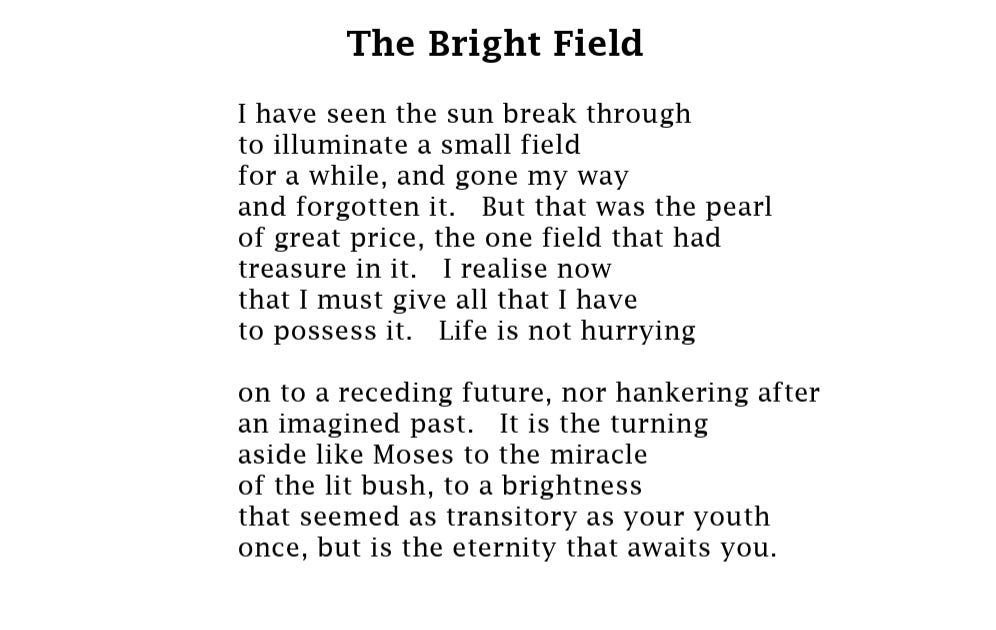
Selected Poems by R. S. Thomas
“RS Thomas was the greatest religious poet writing in English in the 20th century... His poems are an expression of his lifelong argument with himself, of his insistent search for God… His is an urgent, prophetic and unique voice.” (Amazon book description)
Order here to support SEEKER TO SEEKER at no extra cost. You can also browse my personal list of favourite books here.
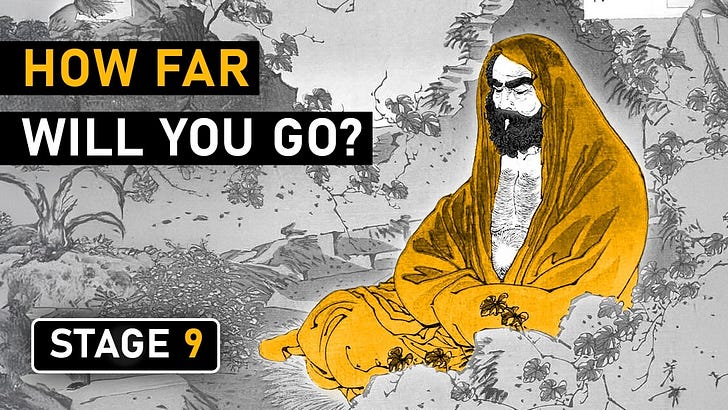
The 10 Oxherding Pictures of Zen Buddhism
It is difficult to explain or describe simplicity, as any such attempt breeds complexity. The intellect can be sharp or dull, slow or fast, wide or narrow, but it can never be simple. Simplicity is the harmony of one’s whole being, and it is not something we achieve through effort. It is the gift we arrive with as children, and the dream we pursue all our adult lives.
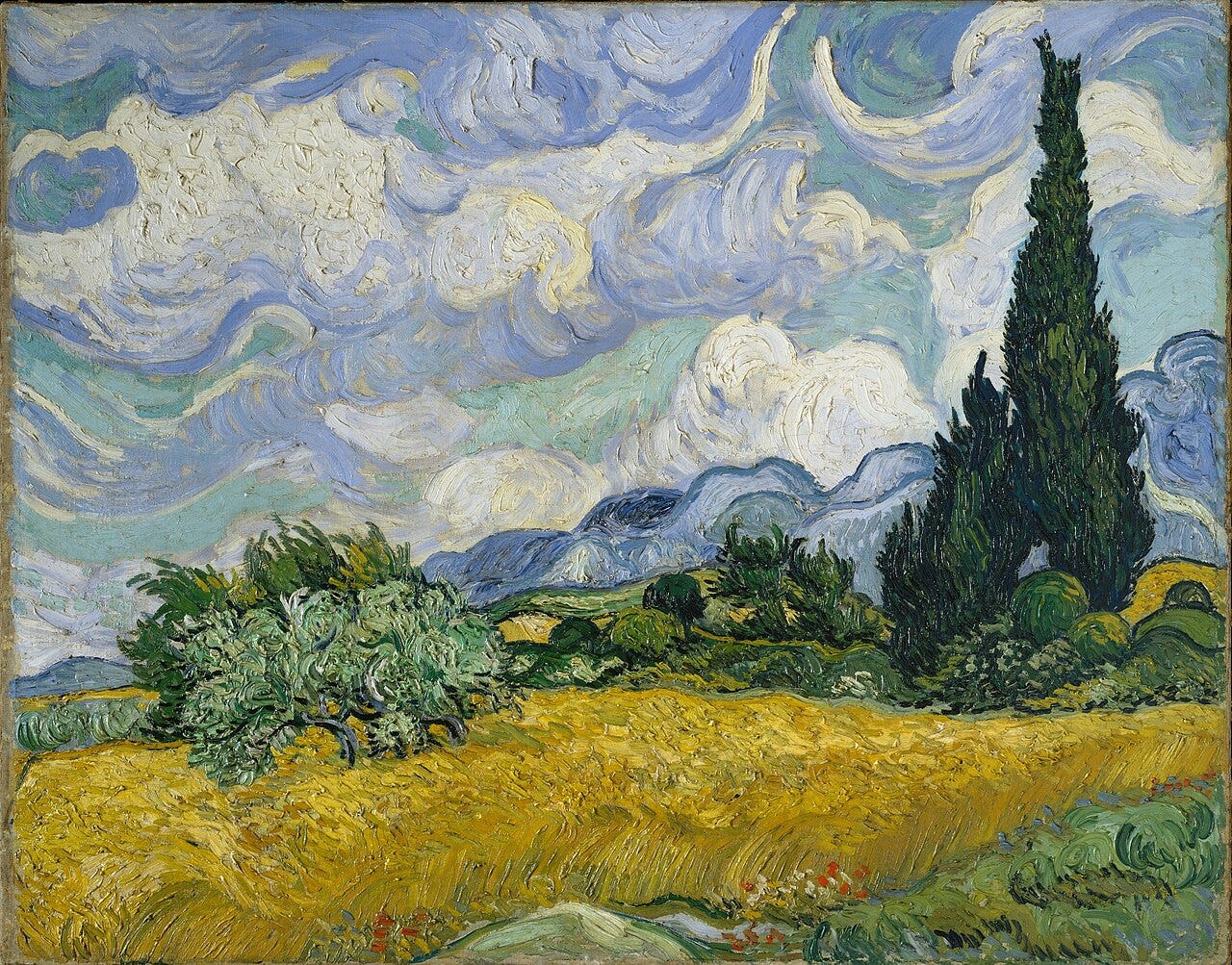
Beauty and truth in an exquisite nutshell, Simeon -- thanks so much for this R.S. Thomas poem, your own words, and the image. Today, their impact is enhanced by the fact that my Vincent van Gogh wall-calendar features this *exact* same 1889 painting, 'Wheat Field with Cypresses', for September 2026. Lovely to take in its intensity, daily or more often: Vincent gives us a glorious balance: wild, windy sky energies yet gentle, flowing breezes bless the foreground grasses, rocks, and earth. Thank you for all three celebrations' instinctive sense of simple things' secret, eternal brightness.