

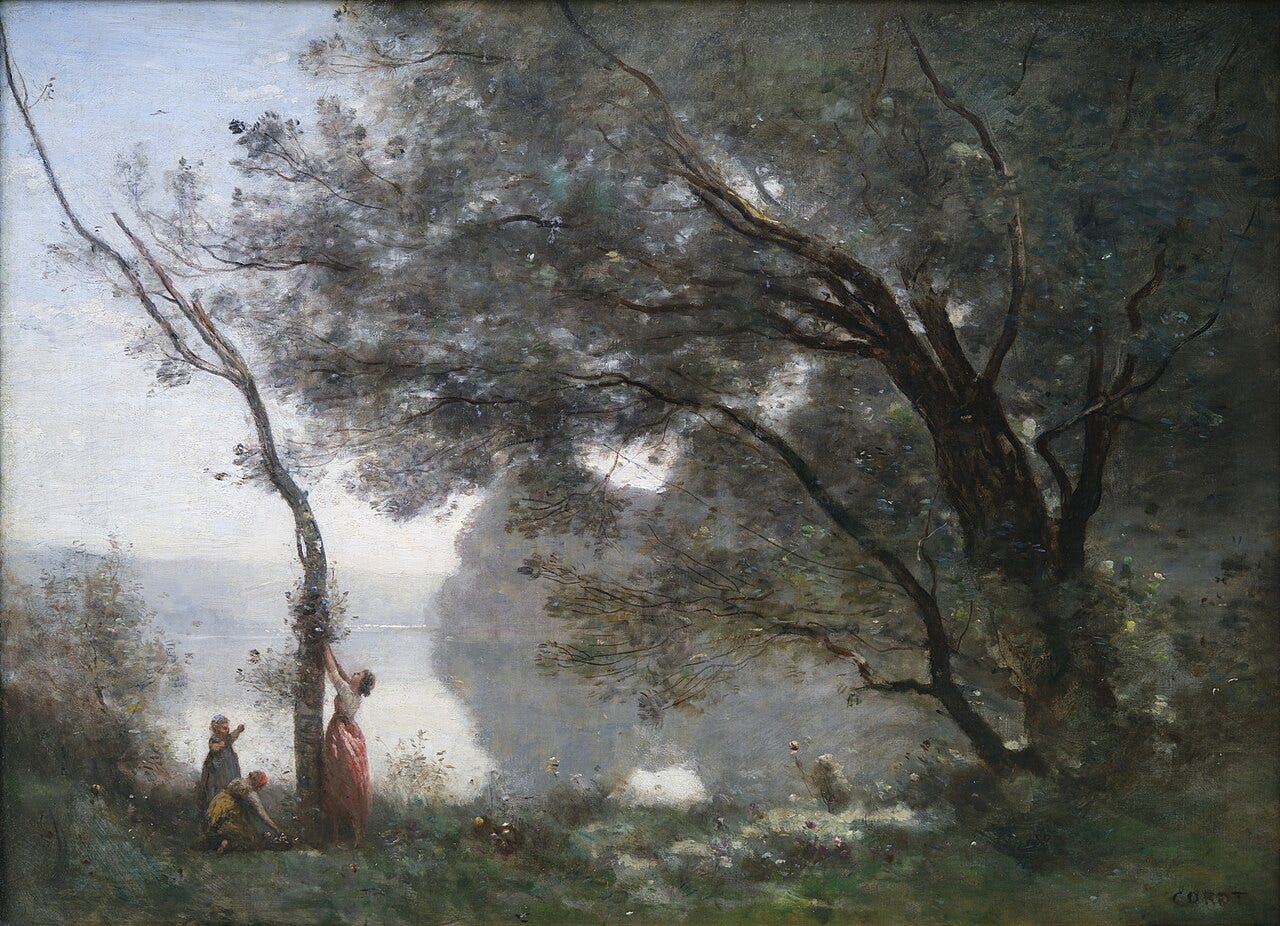

Our deepest insights and our most original ideas come when we are in a state of rest. When we are not trying. They arise in us, but not from us, and should we have enough space for them, they choose us as their vessels.
Our times, possessed as they are with activity-psychosis, have forgotten the significance of rest. We wage war on rest with our arsenal of deadlines, to-do lists, vision boards, productivity systems… One may wonder whether we know rest at all, or only entertainment. We gorge ourselves on activity, hoping for some feat of alchemy to transform it into satisfaction. The idea that satisfaction should come before activity, that our work must be the expression of a life well lived (rather than the means to such a life), is alien to us, suspect… Blasphemous?
The Buddha makes a profound distinction when he lists the mind as one of the sense organs: a receiver of thoughts (rather than their maker, as we believe it is in the West). If we consider this perspective seriously, we may see how counterproductive it is to always keep the mind busy, always consuming, always entertained, always full. A full mind is a mind with no capacity to receive new understanding or to question what understanding it has. It is a mind dulled by the monotony of its patterns, conveniently susceptible to the coercion of leaders, “influencers”, and charlatans of every kind.
Rest, the cessation of activity, the surrender of pursuits—including the pursuit of rest—is essential for the cultivation of insight. Rest (to phrase it in a way more palatable to modern sensibilities) is the divine form of work. When we are at rest, we become the space in which life spontaneously reveals what our shortsighted efforts can never attain.
May we remember to rest,
Simeon
The value of teaching without words
And accomplishing without action
Is understood by few in the world.
—Lao Tzu, Tao Te Ching, verse 43
Suggested Reading

Leisure: The Basis of Culture by Josef Pieper
“One of the most important philosophy titles published in the twentieth century… Leisure is an attitude of the mind and a condition of the soul that fosters a capacity to perceive the reality of the world. Pieper shows that the Greeks and medieval Europeans, understood the great value and importance of leisure. He also points out that religion can be born only in leisure—a leisure that allows time for the contemplation of the nature of God…
“Pieper maintains that our bourgeois world of total labor has vanquished leisure, and issues a startling warning: Unless we regain the art of silence and insight, the ability for non-activity, unless we substitute true leisure for our hectic amusements, we will destroy our culture—and ourselves.”
Order here to support SEEKER TO SEEKER at no extra cost. You can also browse my personal list of favourite books here.
The Man Who Solved Enlightenment: Jiddu Krishnamurti
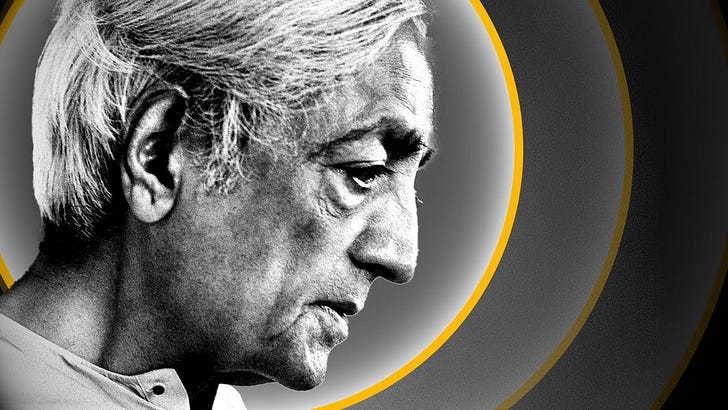
"If experiencing reality beyond thought is so simple and available, why is it so difficult for us? Well, it is difficult because it is so simple and available. It is too simple for understanding to understand, and too available for desire to desire."
Thanks for this lantern-light, Simeon. Heeded or not, your point is always a vital reminder to those of us raised to consider visible busyness an heroic virtue. Too true that rest is routinely devalued, even when most desired or desperately needed for physical health to support inspiration of any kind.
There is a pragmatic edge to this as well: as an employee, I learned that only a hard-won medically-mandated rest-factor in my work contract allowed me to bloom as a creative, effective prof through 30+ years. So damaging that recognition of rest's SOCIAL and economic benefits still lags appallingly.
Yet meditation and mindfulness may be making inroads enough that we can eventually achieve a critical mass of rested human beings more open to kensho and satori -- I've forgotten the theoretical figure that Stephen Mugen Snyder, Roshi gave you in your recent interview with him, but my antennae sparkled to hear it!
Much appreciation, Simeon. In particular, thanks for this silly-to-dispute insight: “A full mind is a mind with no capacity to receive new understanding or to question what understanding it has.”