

.jpg)
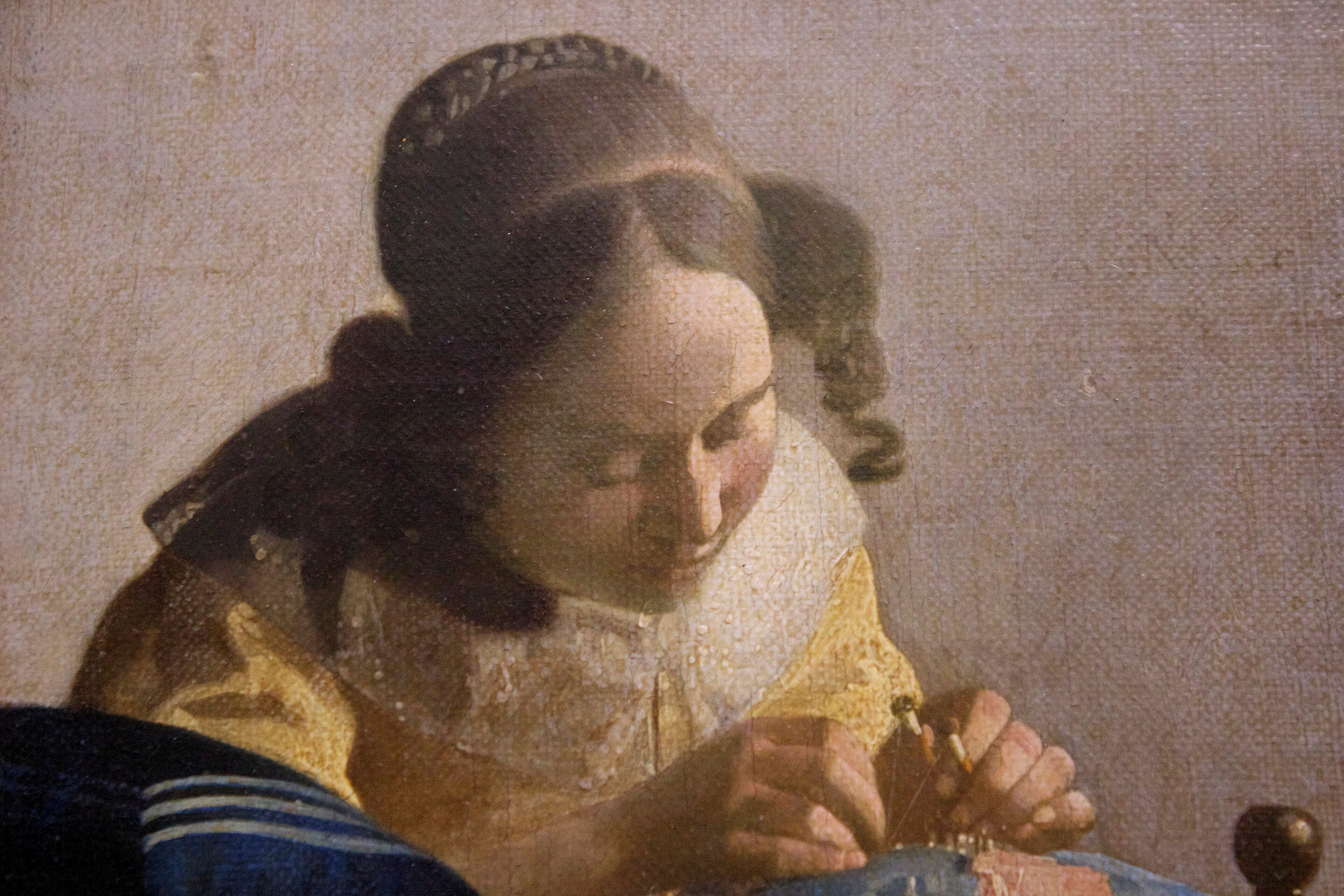
How often do we break ourselves in our search for wholeness through work! We act on an assumption so deeply rooted as to be indistinguishable to us from truth: that we are incomplete in ourselves and only great effort can make us whole.
Regardless of whether it is work of the hands, the mind, or the heart, the goal is to make something happen that is worth the trouble. And—so the assumption goes—the greater the trouble, the worthier the work! We live an alchemist’s life, transmuting incompleteness and hardship into wholeness and achievement.
It is not that we are absolutely delusional. Some of the most important work is some of the most difficult, indeed. It is rather that we reduce creativity and activity to a linear model in which achievement is equivalent to the amount of suffering it requires. Sometimes, that’s just not the case. Sometimes (and the more mature the work, the more this applies), achievement lies not so much in what we make happen, but in what we allow to happen.
As our skill develops, the quality of our work is increasingly defined by how little effort it involves. How little we get in its way. This kind of work cannot arise out of the same anxiety and incompleteness that drive effort. Immersion, play, and celebration are necessary conditions for it—so much so that what we once called “effort”, we now experience as love.
This highest form of work cannot be our means for achieving wholeness, as it requires wholeness from the start. It is a means only to itself, having itself as its only end.
May we learn the art of effortless work,
Simeon
Life has become easy for me, and easiest when it is demanding the most difficult things. Anyone who saw me during the seventy days this fall when, working without a break, I created things of only the highest calibre, things that nobody will surpass—or anticipate—with a responsibility for all the millennia to come; nobody who saw me then would have noticed a single trace of tension, but rather an overflowing freshness and cheerfulness. I never ate more happily, I never slept better. I do not know any other way of handling great tasks than as play: as a sign of greatness, this is an essential presupposition. The slightest compulsion, a gloomy look, any sort of harsh tone in the throat, all these are objections to a person and even more to his work …
—Nietzsche, Ecce Homo
Suggested Reading

The Joyous Science by Friedrich Nietzsche
In The Joyous Science, Nietzsche writes philosophy as song, experiment, wound, laughter, and provocation. It is a book about learning to affirm life without needing life to become painless, moral, or safe. For readers interested in the creative life, it offers a bracing reminder that the highest seriousness may not appear as strain, but as freedom, style, and play.
Order here to support SEEKER TO SEEKER at no extra cost. You can also browse my personal list of favourite books here.
The 10 Oxherding Pictures of Zen Buddhism
Zen describes the progressive path of enlightenment as leading to a point where the mystery of the infinite is always available, even in the most trivial, ordinary things. The quiet wonder of a river flowing is richer than any theory, doctrine, or concept. Eventually, we understand that there is no need to do anything, go anywhere, or become anyone to reach the source of reality. The source is, always has been, and always will be here and now.
Saved for later!
Wanted to read more on it