


There are many kinds of intelligence, “spiritual intelligence” being one of them. Musical intelligence allows us to understand and manipulate melodic and rhythmic structures; emotional intelligence allows us to perceive and respond to emotions within others and ourselves… But what is the function of spiritual intelligence? Ken Wilber defines it simply as the faculty by which we distinguish what is most important.
With our “spiritual eye”, we perceive what is most worth our attention, time, and energy. The less developed it is, the less it perceives beyond what we see with our physical eye—it is enchanted by possessions, pleasure, power, recognition, and other such temptations. But the more differentiated our spiritual intelligence, the less concerned we become with the visible and manifest. Our awareness shifts away from the contents of life and toward the mystery of life itself—toward Spirit, the eternal context.
Spiritual life entails a retreat from the world, from events, from experiences, and from society with its concerns… At least temporarily. The spiritual eye ascends above the vapors of the everyday in search of that clear air which will better allow it to perceive the light of Spirit. But as the scholar and mystic Evelyn Underhill writes:
“To go up alone into the mountain and come back as an ambassador to the world, has ever been the method of humanity’s best friends.”
—Evelyn Underhill, Mysticism
The best fruits of the spiritual journey ripen when we return to the world—when we come back to the mundane in such a way that it is no longer “mundane”. At the peak of its maturity, our faculty for perceiving what is most important perceives every instance of perception as of ultimate importance. Final transcendence is really full presence, or as Underhill writes:
“The completed mystical life… is the deified life.”
—Evelyn Underhill, Mysticism
Not to escape from life, but in the act of living to bless it.
May we make the journey, there and back again,
Simeon
My daily activities are not unusual,
I’m just naturally in harmony with them.
Grasping nothing, discarding nothing.
In every place there’s no hindrance, no conflict.
My supernatural power and marvelous activity:
Drawing water and chopping wood.
—P’ang Yün
Suggested Reading

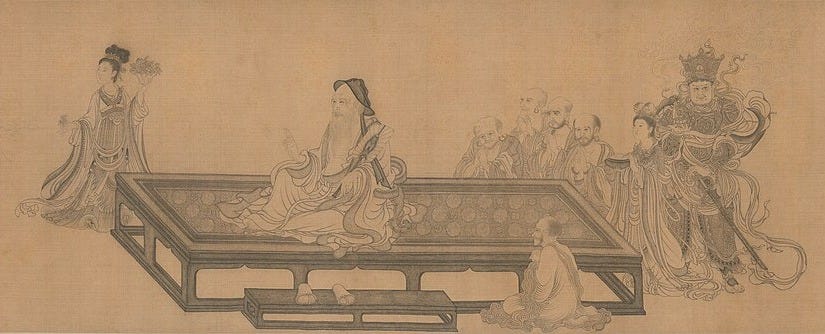
The Vimalakirti Sutra, translated by Burton Watson
What if the sage we seek lives in the town square rather than the monastery? The Vimalakīrti Sūtra tells of a wealthy householder whose wisdom outshines the Buddha’s foremost disciples, and who teaches from the middle of ordinary city life. Burton Watson’s clear translation brings out the humour and daring of a scripture that refuses to divide the sacred from the worldly.
Order here to support SEEKER TO SEEKER at no extra cost. You can also browse my personal list of favourite books here.
The 10 Stages of Awakening | Zen Buddhism
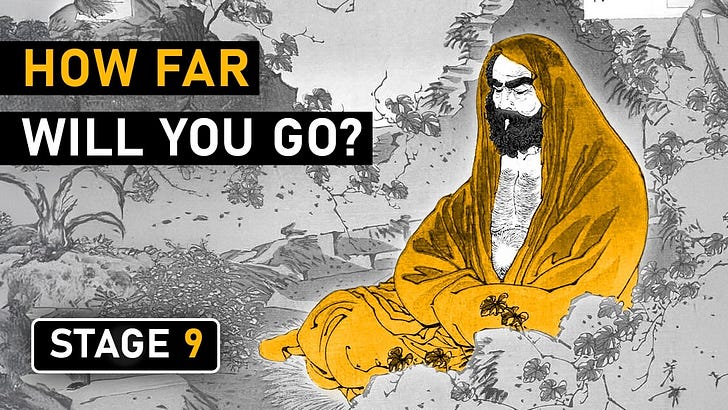
Zen fully embraces the paradox of enlightenment. On the one hand, it says, we are always already enlightened; on the other hand, it takes great effort and dedication to realize our enlightenment. On the one hand, Zen depicts awakening as the most dramatic, transformative experience; on the other, it is the most ordinary fact of life.